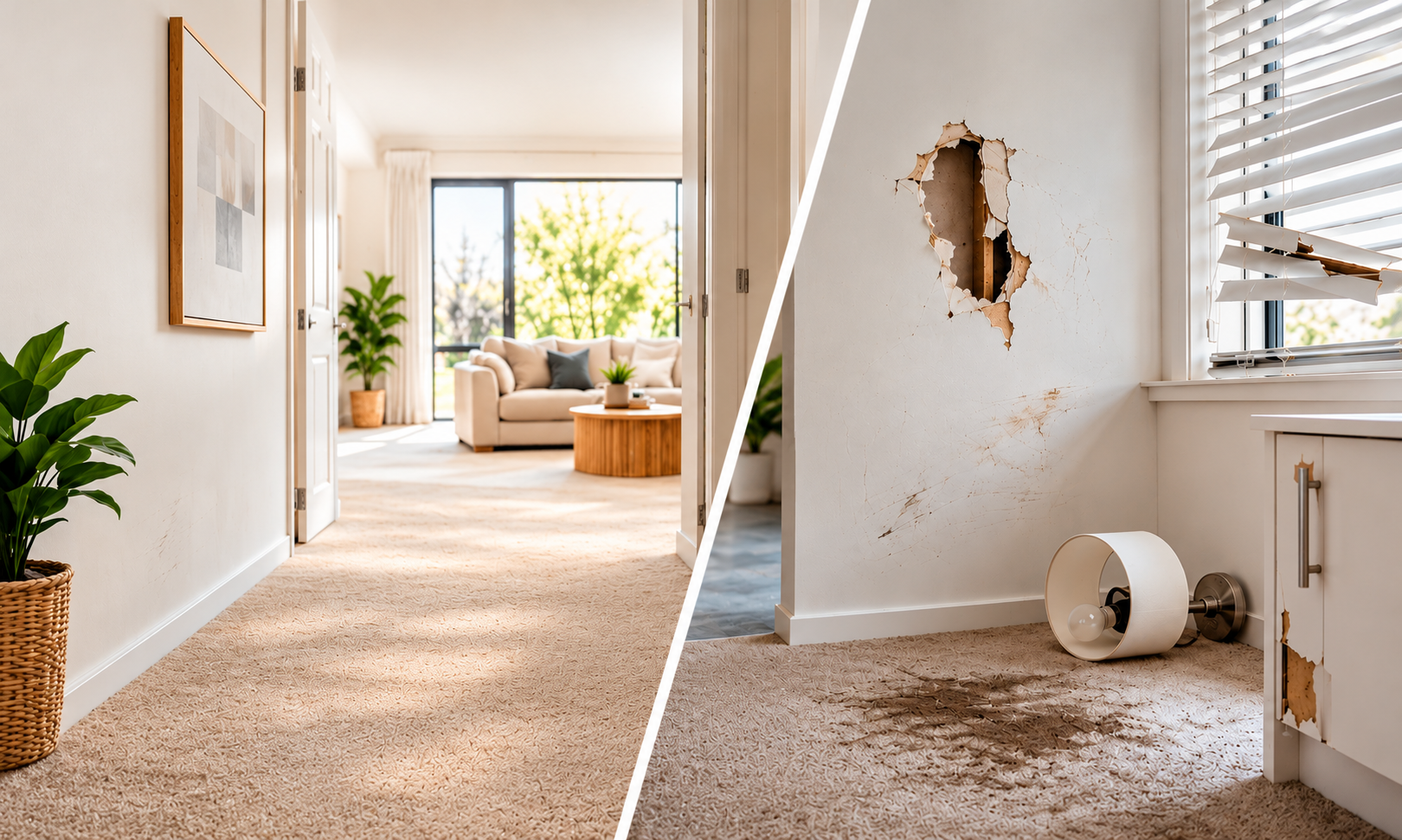
You visit your Adelaide investment property after a tenant moves out. The carpets look a little faded, there are small marks on the walls, and one kitchen cupboard door is damaged.
Your first thought might be: Who pays for all this?
It's a common question for rental property owners. The challenge is knowing which changes are part of everyday living and which ones a tenant may be responsible for repairing.
Understanding fair wear and tear south australia rental rules helps landlords make better maintenance decisions, avoid unnecessary bond disputes, and protect their investment without placing unfair expectations on tenants.
In this guide, we'll explain the difference between normal deterioration and property damage, explore practical examples, and look at how South Australian landlords can handle repairs and end-of-tenancy inspections.
What Is Fair Wear and Tear in a Rental Property?
Fair wear and tear refers to the gradual deterioration of a property that happens through normal, reasonable use over time.
Even when tenants look after a home properly, certain materials and fixtures naturally wear out.
For example, carpets may become less vibrant, paint may fade, and door handles may loosen after years of regular use.
These changes don't automatically mean the tenant has damaged the property.
In South Australia, landlords are generally responsible for maintaining a rental property and addressing deterioration that isn't caused by tenant misuse, carelessness, or deliberate damage.
Common Examples of Fair Wear and Tear
Normal wear and tear rental property examples may include:
- Carpet fibres becoming flattened in frequently used areas.
- Paint gradually fading due to sunlight and age.
- Minor scuff marks from ordinary daily use.
- Door handles or hinges becoming loose over time.
- Curtains fading from prolonged sun exposure.
- Minor surface wear on flooring from regular foot traffic.
However, the circumstances matter.
A small mark after several years of occupancy may be reasonable, while substantial damage that occurs shortly after a tenant moves in deserves closer examination.
The property's age, original condition, tenancy duration, and quality of materials should all be considered.
What Counts as Property Damage in a South Australian Rental?
Property damage is different from the natural deterioration that occurs through everyday living.
It generally involves harm caused by intentional actions, carelessness, neglect, or misuse.
Under South Australian tenancy rules, tenants are responsible for damage they cause, including damage caused by their visitors or other people living at the property.
This doesn't mean every broken item automatically becomes the tenant's responsibility.
The cause of the problem must be considered before deciding who should pay.
Examples of Tenant-Caused Property Damage
Depending on the circumstances, examples may include:
- Large holes in walls caused by impacts.
- Broken windows resulting from careless actions.
- Significant carpet burns or permanent stains.
- Damaged doors caused by force.
- Broken fixtures resulting from misuse.
- Water damage caused by failing to take reasonable care.
- Damage caused by visitors to the property.
Suppose a tenant accidentally knocks over a heavy piece of furniture and breaks a cupboard door.
That may be considered accidental damage rather than normal wear and tear.
On the other hand, a cupboard hinge that fails because of age and ordinary use may be a maintenance responsibility for the landlord.
The distinction depends on what happened, not simply whether something needs replacing.
Fair Wear and Tear vs Property Damage: Practical Examples
Here is a simple comparison to help Adelaide landlords understand common rental property issues.
| Property Area | Possible Fair Wear and Tear | Possible Tenant-Caused Damage |
| Carpets | Gradual fading and flattened fibres | Burns, large stains or tears |
| Walls | Minor scuffs and faded paint | Large impact holes or extensive damage |
| Flooring | Surface wear from normal walking | Deep gouges caused by careless movement |
| Curtains | Fading due to sunlight | Rips caused by misuse |
| Doors | Hinges loosening with age | Broken panels from force |
| Kitchen | Worn handles from regular use | Damaged cupboards from misuse |
| Bathroom | Age-related deterioration of fittings | Broken fittings caused by careless handling |
| Windows | Age-related deterioration of seals | Broken glass caused by tenant actions |
These examples are guides, not automatic legal classifications.
A scratched floor, for example, may be normal deterioration or tenant-caused damage depending on its extent, age, and cause.
This is why good property records are so important.
Who Is Responsible for Repairs in South Australia?
Landlords and tenants both have responsibilities when maintaining a rental property.
Understanding these obligations can prevent small maintenance problems from developing into larger disputes.
Landlord Responsibilities
Landlords are generally responsible for keeping rental premises in a reasonable state of repair and maintaining essential property features.
Typical responsibilities include:
- Repairing faults arising through normal deterioration.
- Maintaining plumbing, electrical systems, and supplied appliances.
- Addressing structural problems.
- Arranging necessary repairs within a reasonable time.
- Maintaining the property in accordance with applicable housing standards.
For example, if an air conditioner stops working because of an internal fault or ordinary ageing, repairing it will generally be the landlord's responsibility.
Landlords should also respond promptly when tenants report maintenance issues.
Ignoring a small leak can lead to more serious property damage and potentially greater repair expenses.
Tenant Responsibilities
Tenants must take reasonable care of the property and report issues requiring attention.
They are generally responsible for repairing damage they cause intentionally or through neglect, including damage caused by visitors.
Common tenant responsibilities may include:
- Keeping the premises reasonably clean.
- Reporting maintenance problems promptly.
- Replacing light globes where applicable.
- Carrying out ordinary garden maintenance such as mowing and weeding.
- Repairing tenant-caused damage within a reasonable time.
A tenant should not be expected to pay for replacing an item simply because it has reached the end of its useful life.
The condition and cause of the damage must be considered fairly.
How Much Can a Landlord Claim for Property Damage?
One of the biggest mistakes a landlord can make is assuming that a damaged item automatically justifies charging the tenant for a brand-new replacement.
Imagine a carpet has been in a rental property for many years.
At the end of the tenancy, the landlord discovers a significant stain caused by the tenant.
There may be a legitimate basis for a damage claim, but the amount should account for the carpet's age, existing condition, and reasonable loss.
The tenant should not automatically be required to fund a complete upgrade from an old carpet to a new one.
Factors That Can Affect a Damage Claim
Before requesting compensation, consider:
- The condition of the item when the tenancy began.
- How old the item was.
- How long the tenant occupied the property.
- Whether the damage can be repaired rather than replaced.
- The reasonable cost of restoration.
- Whether reliable evidence connects the damage to the tenant.
Invoices, photographs, repair assessments, and entry condition records help establish whether a claim is reasonable.
Claims should be based on actual, supportable loss rather than an opportunity to renovate at the tenant's expense.
Why Entry and Exit Condition Reports Matter
A detailed condition report is one of the most useful documents for managing rental property damage.
Without an accurate record of the property's original condition, it can be difficult to establish when damage occurred.
South Australian tenancy procedures require an inspection sheet to record property condition at the beginning and end of a tenancy.
What Should Be Recorded Before a Tenant Moves In?
Landlords or property managers should document:
- Walls, ceilings, paintwork, and flooring.
- Carpets and existing stains.
- Kitchen cupboards, benchtops, and appliances.
- Bathroom fittings and plumbing fixtures.
- Doors, windows, blinds, and curtains.
- Outdoor areas and garden condition.
- Any existing faults or signs of deterioration.
Clear, dated photographs provide useful supporting evidence.
For example, if a carpet already had a visible stain before a tenant moved in, that information can help prevent an incorrect claim later.
What Happens During the Final Inspection?
At the end of the tenancy, the property's condition should be compared with the original inspection records.
The assessment should consider reasonable deterioration during occupancy.
A thorough final inspection helps identify genuine damage, outstanding cleaning concerns, and maintenance issues that belong to the landlord.
For owners seeking professional property management adelaide services, organised inspections and accurate documentation are important parts of protecting a rental investment.
How Are Rental Bond Disputes Handled in South Australia?
A rental bond provides security for certain legitimate costs arising from a tenancy.
It isn't an automatic payment to the landlord whenever maintenance work is required.
In South Australia, residential bonds are managed through Consumer and Business Services (CBS), with Residential Bonds Online available for bond transactions and claims.
When a tenancy ends, the tenant and managing party can agree on how the bond should be distributed.
If they disagree, a dispute process may follow.
Steps Landlords Should Take Before Making a Bond Claim
Step 1: Review the original inspection report
Compare the entry condition with the property's condition when the tenant leaves.
Step 2: Separate wear and tear from damage
Identify which issues result from ordinary use and which may involve tenant responsibility.
Step 3: Collect supporting evidence
Use dated photographs, inspection records, repair invoices, and relevant correspondence.
Step 4: Discuss the issue with the tenant
Explain the concern and provide an opportunity to resolve the matter.
Step 5: Follow the correct bond process
Where an agreement cannot be reached, use the applicable CBS procedure. Disputes can ultimately be referred to the South Australian Civil and Administrative Tribunal (SACAT).
Landlords should avoid treating bond deductions as automatic. Evidence and the correct process matter.
How Can Adelaide Landlords Prevent Property Damage?
Not every maintenance problem can be prevented.
However, good property management practices can help reduce avoidable damage and identify issues before they become expensive.
1. Complete Thorough Entry Inspections
Record the property's condition carefully before tenants move in.
Accurate documentation helps everyone understand the condition in which the premises were provided.
2. Arrange Lawful Routine Inspections
Routine inspections allow property managers to identify maintenance issues and assess how the property is being maintained.
Inspections must follow South Australia's applicable entry and notice requirements.
They should focus on property condition and maintenance, while respecting the tenant's privacy.
3. Respond Quickly to Maintenance Requests
A leaking tap or minor plumbing issue can become much more expensive if ignored.
Timely repairs can prevent additional damage and help maintain a positive landlord-tenant relationship.
4. Maintain Clear Communication
Tenants should know how to report maintenance issues and who to contact when urgent repairs are required.
Written communication also creates a record of requests, responses, and repair arrangements.
5. Plan for Long-Term Maintenance
Owning an investment property adelaide involves more than collecting rental income.
Landlords should budget for ongoing maintenance, including painting, flooring, appliances, and other items that naturally deteriorate over time.
A maintenance allowance helps avoid unexpected financial pressure.
Why Professional Property Management Can Help
Managing a rental property involves inspections, tenant communication, maintenance coordination, and compliance with tenancy requirements.
For owners managing multiple properties or living away from their investment, these tasks can become difficult to handle consistently.
A professional property manager can help coordinate inspections, maintain records, arrange appropriate repairs, and communicate with tenants about property concerns.
At First Move Real Estate, property management services are designed to support Adelaide landlords with rental pricing, tenant selection, maintenance, and ongoing property oversight.
Professional management cannot eliminate every dispute, but organised documentation and clear communication can make problems easier to address.
Owners reviewing their property's rental potential can also request a free rental appraisal to better understand current rental expectations and discuss their investment goals.
What If Property Damage Makes You Consider Selling?
Sometimes landlords discover that a rental property requires more work than expected.
A property may need extensive repairs, an upgrade, or a reassessment of its long-term suitability as an investment.
Before deciding to sell, compare the likely repair costs, rental potential, ownership expenses, and current market conditions.
Selling isn't always the best response to maintenance problems.
However, if your investment goals have changed, understanding your property's sales potential may help you decide what to do next.
First Move Real Estate also assists homeowners with selling property in Adelaide, including guidance on preparing a property for sale.
Frequently Asked Questions
1. Can a landlord charge for fair wear and tear in South Australia?
Generally, no. Tenants should not be charged for ordinary deterioration resulting from reasonable use. A landlord should distinguish normal wear from damage caused by the tenant.
2. Is a stained carpet considered fair wear and tear?
It depends on the circumstances. Gradual fading or flattening may be normal wear, while a substantial stain caused by careless use may count as damage. The carpet's age and original condition also matter.
3. Who pays for accidental damage in a rental property?
If the tenant or their visitor causes damage, the tenant may be responsible even if it was accidental. Responsibility depends on the cause and circumstances, not simply whether the damage was deliberate.
4. Can a landlord deduct cleaning costs from a rental bond?
A landlord may have grounds to claim reasonable cleaning costs if the premises were not left in the condition required by the tenancy agreement and applicable law. Normal deterioration alone is not a reason for cleaning deductions.
5. What happens if a tenant disagrees with a damage claim?
The parties should first try to resolve the disagreement. If they cannot agree, South Australia's Consumer and Business Services bond dispute process applies, with SACAT available to determine unresolved disputes.
6. Does a landlord need photographs to make a bond claim?
Photographs are not the only possible evidence, but they are extremely helpful. Condition reports, invoices, inspection records, and communications may also support a claim.
7. Does normal wear and tear apply to long-term tenants?
Yes. The length of the tenancy is an important consideration when assessing deterioration. A property occupied for several years will naturally show more wear than one occupied for only a few months.
Final Thoughts
Fair wear and tear and tenant-caused property damage are not the same thing.
For Adelaide landlords, understanding that difference is essential when managing repairs, conducting inspections, and deciding whether a bond claim is justified.
Good documentation, reasonable maintenance planning, and timely communication can help prevent disputes and protect the condition of a rental property.
If you own a rental property in Adelaide and want support with inspections, maintenance coordination, and everyday management, First Move Real Estate can help you explore suitable property management options.
Contact First Move Real Estate to discuss your Adelaide rental property and its management needs.